Picture this: a young developer sits hunched over their computer at 2 AM, tweaking the jump height of their character for the hundredth time. They know something isn’t quite right—the leap feels floaty, disconnected, unsatisfying. After adjusting a single parameter by 0.2 units, suddenly everything clicks. The character springs to life with a crisp, responsive jump that feels perfect. This is the magic of platformer game design—where tiny details create monumental differences in player experience.
Platformer games have captivated players for over four decades, from the iconic Super Mario Bros. to modern indie darlings like Celeste) and Hollow Knight. These seemingly simple games hide incredible complexity beneath their accessible surfaces, requiring designers to master game physics, player psychology, and pure creativity in game design to craft memorable experiences.
Key Takeaways 🎯
• Precise controls and responsive physics form the foundation of exceptional platformer game design • Level design principles like visual clarity, progressive difficulty, and meaningful choices drive player engagement • Character mechanics including jump arcs, movement speed, and special abilities must feel intuitive yet distinctive • Visual and audio feedback systems guide players and create emotional connections to gameplay • Iterative playtesting and refinement separate good platformers from truly great ones
Understanding the Core Elements of Platformer Game Design
The Physics Foundation
At the heart of every great platformer lies a robust physics system that feels both realistic and fantastical. Players don’t want perfect real-world physics—they want physics that feel right for the game world.
Gravity and Weight 🌍 The gravitational pull in platformers typically ranges from 1.5 to 3 times stronger than real-world gravity. This creates snappier, more responsive movement that keeps players engaged. Consider how different gravity settings affect gameplay:
- Heavy gravity: Creates precise, weighty movement (think Mega Man)
- Light gravity: Enables floaty, graceful traversal (like in Ori series)
- Variable gravity: Adds complexity and puzzle elements (Gravity Rush)
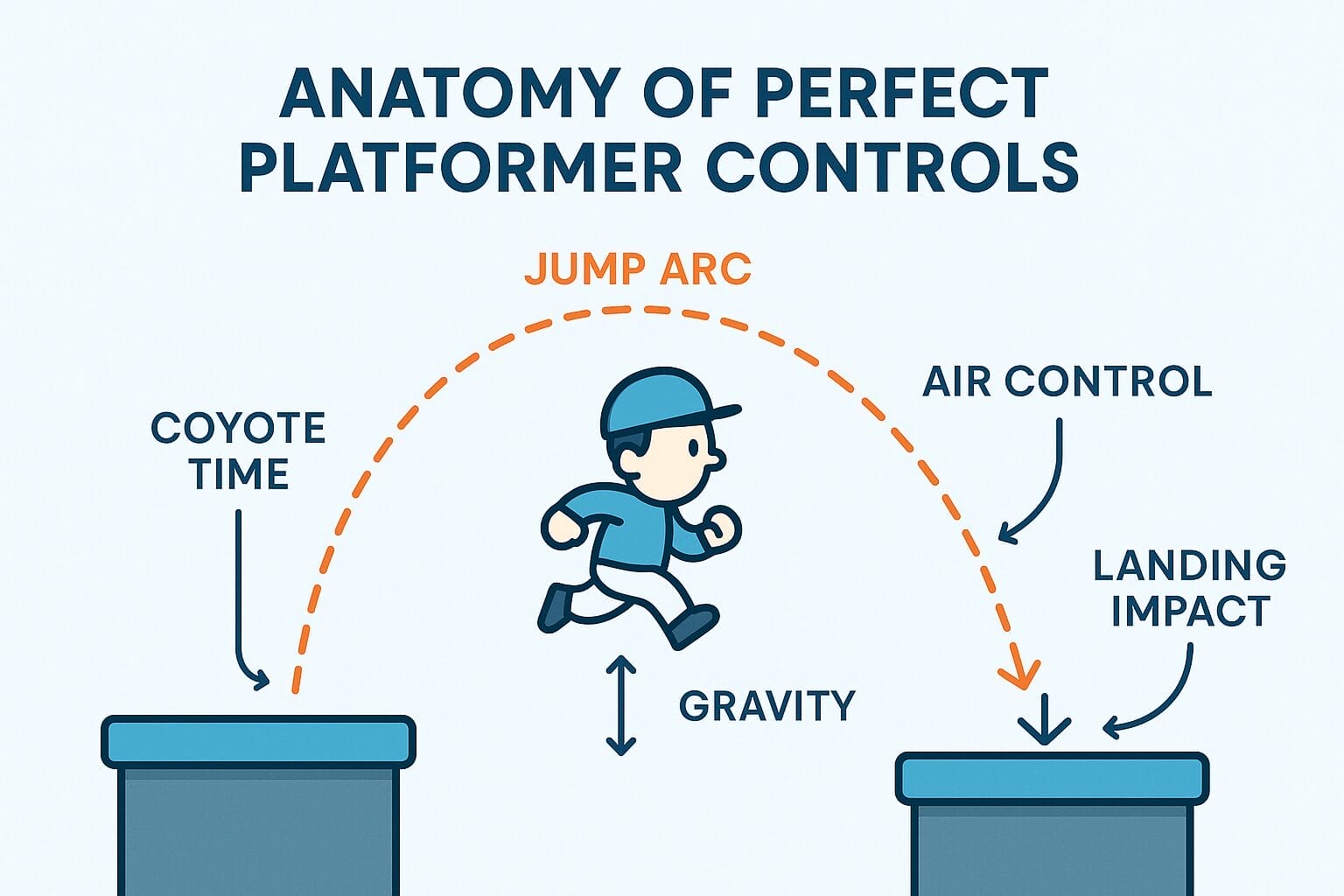
Jump Mechanics The jump is the soul of platformer game design. Every aspect must be carefully tuned:
- Jump height: Should feel powerful but not overpowered
- Hang time: The duration at peak height affects precision
- Fall speed: Often faster than rise speed for better control
- Coyote time: Brief grace period after leaving platforms
- Jump buffering: Accepting jump inputs slightly before landing
Movement Fundamentals
Acceleration and Deceleration Characters shouldn’t instantly reach top speed or stop on a dime. Smooth acceleration curves create:
- More realistic movement
- Better control precision
- Opportunities for momentum-based gameplay
Air Control The degree of mid-air maneuverability dramatically impacts gameplay feel:
- Full air control: Maximum player agency (most modern platformers)
- Limited air control: More realistic but potentially frustrating
- No air control: Old-school challenge (early arcade games)
Character Design and Abilities in Platformer Games
Creating Memorable Protagonists
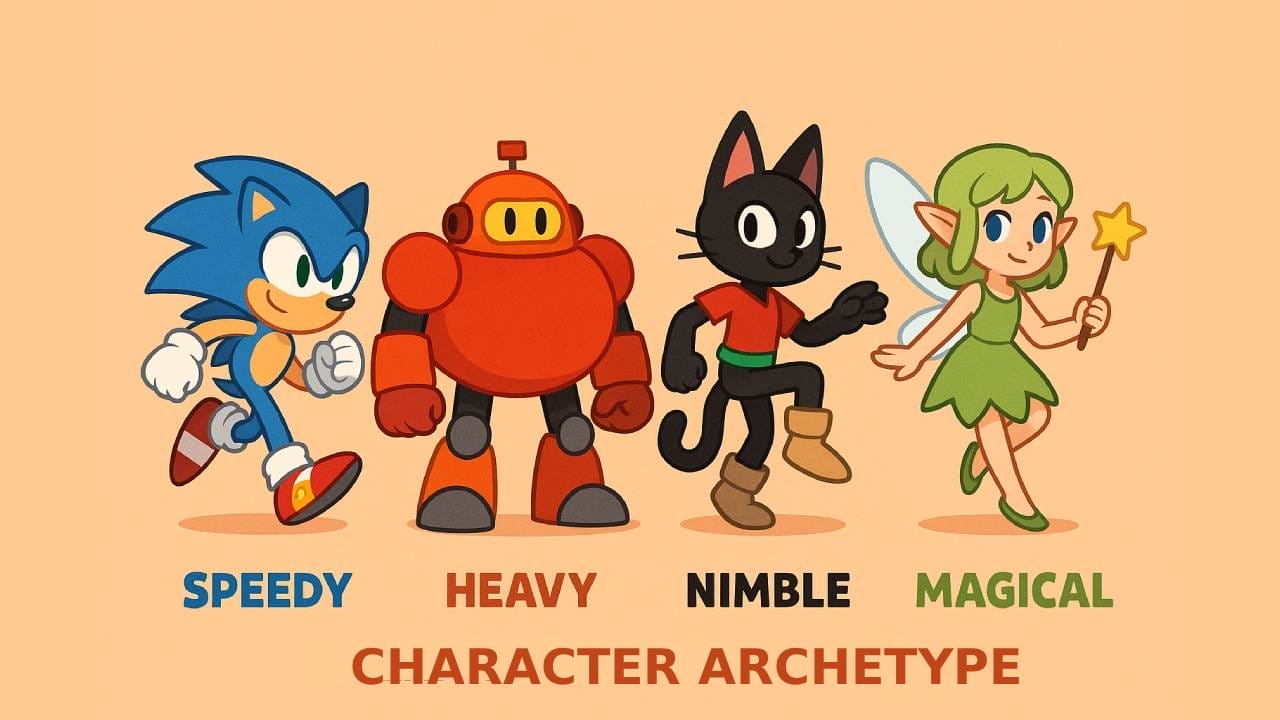
The best platformer characters are instantly recognizable and perfectly suited to their gameplay mechanics. Mario’s round, bouncy design suggests his jumping ability. Sonic’s streamlined form implies speed. These aren’t accidents—they’re carefully crafted design decisions.
Visual Communication 👁️ Character design should immediately communicate:
- Primary abilities and movement style
- Personality and attitude
- Relative size and weight
- Vulnerability and strength
Core Ability Systems
Primary Movement Every platformer character needs a signature movement style:
| Movement Type | Examples | Design Considerations |
|---|---|---|
| Running & Jumping | Mario, Rayman | Classic, versatile, intuitive |
| Wall Climbing | Mega Man X, Celeste | Adds verticality, requires careful level design |
| Gliding/Flying | Yoshi, Kirby | Changes pacing, affects level height |
| Dashing | Celeste, Katana Zero | Adds precision, creates combo potential |
| Double/Multi-Jump | Shovel Knight, Ori | Increases mobility, reduces fall punishment |
Secondary Abilities These add depth and progression:
- Combat moves: Attacks, blocks, counters
- Environmental interaction: Moving objects, activating switches
- Transformation: Size changes, temporary powers
- Tool usage: Grappling hooks, jetpacks, special items
Progression and Power-Ups
Temporary Enhancements Power-ups create excitement and variety:
- Movement boosts: Speed increases, higher jumps
- Protective abilities: Shields, extra health
- Offensive tools: Projectiles, enhanced attacks
- Environmental powers: Fire immunity, underwater breathing
Permanent Upgrades Metroidvania-style progression keeps players invested:
- New movement abilities unlock previously inaccessible areas
- Enhanced versions of existing powers
- Quality-of-life improvements (longer dash distance, faster movement)
Level Design Principles for Platformers
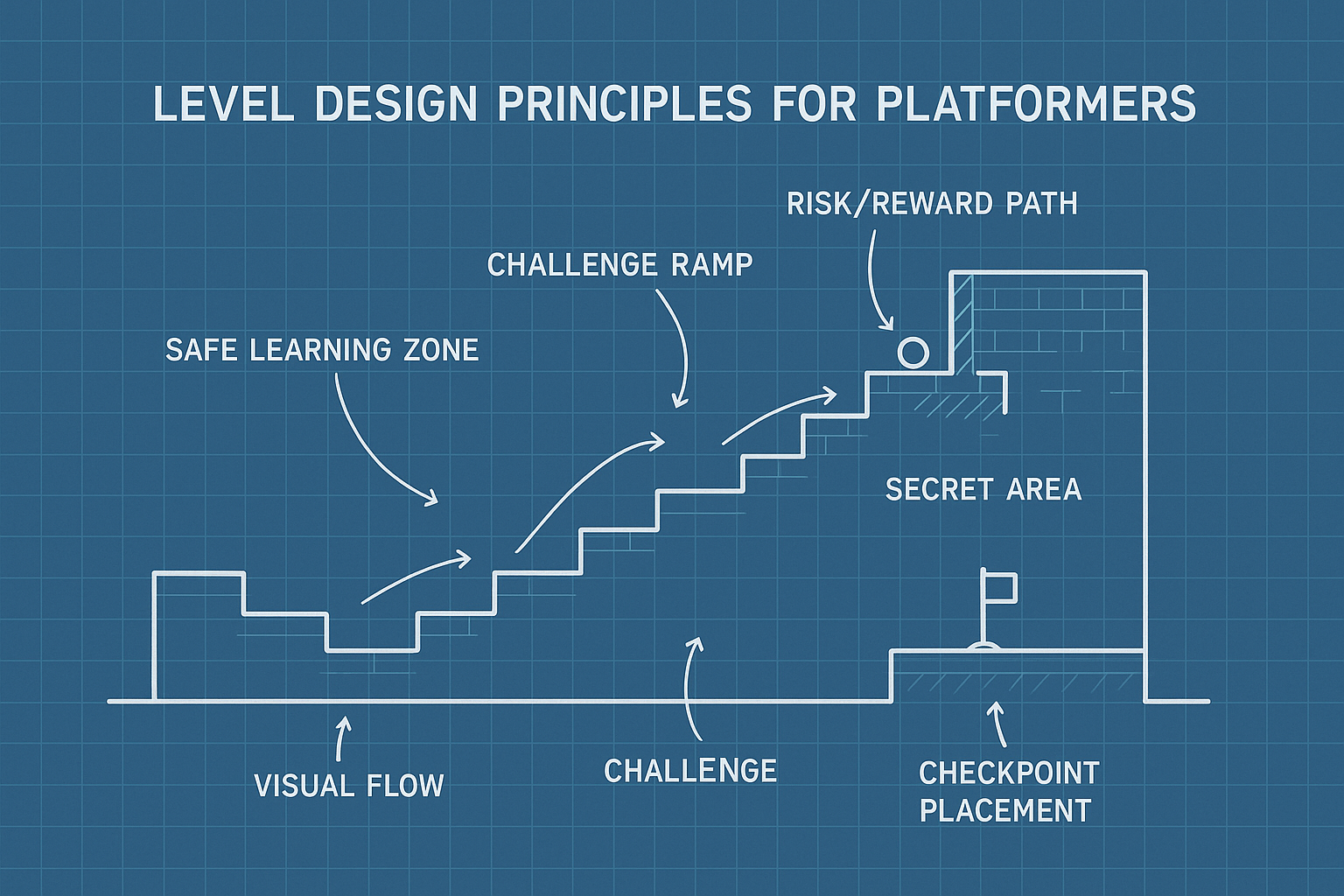
Visual Clarity and Readability
Players need to instantly understand their environment. Visual hierarchy guides attention to important elements:
Foreground, Midground, Background 🎨
- Foreground: Interactive elements (platforms, enemies, collectibles)
- Midground: Decorative elements that don’t interfere with gameplay
- Background: Atmospheric elements that establish mood
Color and Contrast
- Interactive objects should stand out from decoration
- Dangerous elements need clear visual warnings
- Collectibles should be immediately recognizable
The Art of Platform Placement
Spacing and Rhythm Platform placement creates the game’s rhythm and flow:
- Comfortable jumps: Build confidence and momentum
- Challenging gaps: Create tension and satisfaction
- Impossible gaps: Force players to find alternative solutions
Vertical Design Multi-layered levels add complexity:
- High paths: Often easier but with fewer rewards
- Low paths: More challenging with better collectibles
- Secret areas: Hidden paths for exploration-minded players
Progressive Difficulty and Pacing
The Learning Curve Great platformer game design introduces concepts gradually:
- Introduction: Present new mechanic in safe environment
- Development: Combine with familiar elements
- Twist: Subvert expectations or add complexity
- Conclusion: Master-level challenge using the mechanic
Difficulty Spikes and Valleys 📈 Constant challenge leads to fatigue. Alternate between:
- High-intensity sections: Demanding precision and timing
- Breathing room: Exploration, story, or easier traversal
- Optional challenges: Extra content for skilled players
User Experience and Player Psychology
The Feel of Movement
Juice and Polish ✨ Small details create big impacts:
- Screen shake: Adds weight to impacts
- Particle effects: Make actions feel powerful
- Animation frames: Extra frames on landing create impact
- Sound design: Audio feedback reinforces visual cues
Forgiveness Systems Good platformers help players succeed:
- Coyote time: Brief window to jump after leaving platforms
- Jump buffering: Queue jump inputs before landing
- Ledge grabbing: Automatic assistance for close calls
- Checkpoint frequency: Minimize repeated content
Emotional Engagement
The Flow State The best platformers create flow—that magical state where players lose track of time:
- Clear, immediate goals
- Instant feedback on actions
- Perfect balance of challenge and skill
- Sense of control and agency
Failure and Recovery Death should feel like a learning opportunity, not punishment:
- Quick respawn: Minimize downtime between attempts
- Clear cause: Players should understand why they failed
- Immediate retry: Easy access to try again
- Visible progress: Show improvement even in failure
Technical Implementation and Tools
Physics Engines and Frameworks
Popular Game Engines for Platformers 🛠️
- Unity: Versatile, strong 2D tools, large community
- Godot: Free, lightweight, excellent for indie developers
- GameMaker Studio: Specialized for 2D games
- Construct 3: Browser-based, no coding required
- Custom engines: Maximum control, highest complexity
Key Technical Considerations
- Fixed timestep: Ensures consistent physics across devices
- Collision detection: Precise, predictable interactions
- Frame rate independence: Smooth gameplay regardless of performance
- Input buffering: Responsive controls even with timing variations
Performance Optimization
2D Rendering Efficiency
- Sprite atlasing: Reduce draw calls
- Object pooling: Reuse game objects efficiently
- Culling: Don’t render off-screen elements
- Level streaming: Load content as needed
Audio Design in Platformer Games
Sound Effects and Feedback
Movement Audio 🔊 Every action needs appropriate audio feedback:
- Footsteps: Vary by surface material
- Jumps: Distinct sounds for takeoff and landing
- Impacts: Different intensities for different collisions
- Environmental: Wind, water, mechanical sounds
Musical Integration The best platformer soundtracks enhance gameplay:
- Dynamic music: Adapts to player actions and game state
- Rhythmic gameplay: Sync challenges to musical beats
- Emotional guidance: Music cues tension, relief, excitement
- Memorable themes: Hooks that players remember long after playing
Common Pitfalls and How to Avoid Them
Design Mistakes That Kill Fun
Floaty Controls 😵 When characters feel disconnected from player input:
- Solution: Increase gravity, reduce air time
- Test: Can players make precise movements consistently?
Unclear Visual Communication When players can’t distinguish interactive elements:
- Solution: Strong visual hierarchy, consistent design language
- Test: Can new players immediately identify platforms and hazards?
Punishing Difficulty Spikes When challenge increases too rapidly:
- Solution: Gradual progression, optional advanced challenges
- Test: Track where players repeatedly fail and adjust
Technical Pitfalls
Inconsistent Physics Frame rate variations causing different physics behavior:
- Solution: Fixed timestep physics updates
- Test: Verify identical behavior across different devices
Poor Collision Detection Characters falling through platforms or getting stuck:
- Solution: Continuous collision detection, proper collision shapes
- Test: Extensive edge case testing
Advanced Platformer Game Design Techniques
Emergent Gameplay and Player Expression
Speedrunning Considerations ⚡ Design choices that enable advanced techniques:
- Movement canceling: Allow skilled players to chain abilities
- Sequence breaking: Alternative paths through levels
- Trick potential: Unintended but fun movement combinations
Player Creativity Systems that reward experimentation:
- Multiple solutions: Different approaches to challenges
- Combo systems: Chaining abilities for enhanced effects
- Environmental interaction: Creative use of level elements
Accessibility and Inclusivity
Motor Accessibility
- Customizable controls: Remappable inputs
- Difficulty options: Adjustable challenge parameters
- Assist modes: Optional help for struggling players
Visual Accessibility
- Colorblind support: Don’t rely solely on color for information
- High contrast modes: Clear distinction between elements
- Text scaling: Readable interface elements
Cognitive Accessibility
- Clear objectives: Always communicate what players should do
- Consistent rules: Predictable game behavior
- Optional complexity: Advanced features that can be ignored
The Business Side of Platformer Development
Market Considerations in 2025
Platform Distribution 💼
- Steam: Largest PC market, high competition
- Console stores: Nintendo eShop particularly friendly to platformers
- Mobile: Different control considerations, casual audience
- Subscription services: Game Pass, Apple Arcade opportunities
Monetization Strategies
- Premium pricing: Single purchase, complete experience
- DLC content: Additional levels, characters, or abilities
- Cosmetic options: Character skins, level themes
- Avoid pay-to-win: Preserve gameplay integrity
Development Team Structure
Essential Roles
- Game designer: Overall vision and mechanics
- Programmer: Physics, controls, and systems
- Artist: Characters, environments, and effects
- Sound designer: Audio feedback and music
- Level designer: Layout and pacing specialist
Indie vs. Studio Development Small teams can create exceptional platformers by:
- Focusing on core mechanics: Perfect the fundamentals first
- Iterating rapidly: Quick prototypes and frequent testing
- Leveraging existing tools: Don’t reinvent everything
- Building community: Early feedback from players
Testing and Iteration in Platformer Design
Playtesting Strategies
Internal Testing 🧪
- Designer testing: Verify technical functionality
- Team testing: Fresh eyes on familiar content
- Metrics tracking: Where do players struggle or excel?
External Playtesting
- Target audience: Genre fans provide valuable insights
- Fresh players: Identify assumption-based design flaws
- Accessibility testing: Ensure broad playability
Data-Driven Design Modern tools enable detailed analytics:
- Heat maps: Where players spend time or die frequently
- Completion rates: Which levels are too hard or easy
- Player paths: How people navigate level layouts
- Session length: Engagement and retention metrics
Iterative Improvement
The Polish Phase The difference between good and great platformers:
- Control refinement: Tiny adjustments with huge impact
- Visual clarity: Ensuring every element communicates clearly
- Audio integration: Perfect timing and appropriate feedback
- Performance optimization: Smooth experience across devices
Post-Launch Support Successful platformers evolve:
- Bug fixes: Address technical issues quickly
- Balance updates: Adjust difficulty based on player data
- Content updates: New levels or features
- Community features: Level editors, sharing systems
Future Trends in Platformer Game Design
Emerging Technologies
Advanced Physics 🚀
- Fluid dynamics: Water and liquid interactions
- Destructible environments: Dynamic level changes
- Realistic lighting: Shadows as gameplay elements
- Particle systems: More expressive environmental effects
AI Integration
- Procedural level generation: Infinite content possibilities
- Adaptive difficulty: Real-time challenge adjustment
- Smart NPCs: More engaging character interactions
- Automated testing: AI-driven quality assurance
Design Evolution
Hybrid Genres Platformers increasingly blend with:
- Puzzle games: Environmental problem-solving
- RPG elements: Character progression and stats
- Narrative focus: Story-driven platforming
- Multiplayer cooperation: Shared challenge experiences
Accessibility Innovation
- Universal design: Games playable by everyone
- Adaptive interfaces: Controls that adjust to player needs
- Inclusive narratives: Diverse characters and stories
- Barrier-free gaming: Removing unnecessary obstacles
Conclusion: Mastering the Art of Platformer Game Design
Creating exceptional platformer games requires balancing technical precision with creative vision. The most successful platformers feel effortless to play but represent countless hours of careful refinement and iteration. Every jump height adjustment, every platform placement, every visual effect serves the greater goal of creating an engaging, memorable experience.
The key to mastering platformer game design lies in understanding that players don’t just want to move through levels—they want to feel powerful, clever, and accomplished. Whether crafting the perfect jump arc or designing a challenging but fair obstacle course, always prioritize the player’s emotional journey alongside their physical one.
Your Next Steps 📋
- Start prototyping: Build a simple character controller and experiment with movement feel
- Study the masters: Analyze successful platformers to understand their design decisions
- Playtest early and often: Get feedback on your controls before building levels
- Focus on fundamentals: Perfect basic movement before adding complex mechanics
- Join the community: Connect with other developers for support and collaboration
🎮 Interactive Platformer Physics Playground

Game Developer | Designer | Creative Storyteller
Matt Dogherby is a passionate game developer and designer based in Brisbane, Australia. With a career spanning over 15 years, Matt combines technical skill with a deep love for storytelling to create games that captivate and inspire. His unique perspective is shaped by the laid-back energy of Brisbane and his lifelong connection to the ocean, where he often trades coding sessions for surf sessions.