

From Pong to the Blockbusters of 2026, A Comprehensive SEO-Optimized Guide to the History, Principles, People, and Future of Level Design in Video Games
1. What Is video game level design?
In the vast and ever-evolving world of video games, level design stands as one of the most critical yet often underappreciated disciplines in game development. Level design is the art and science of creating the spaces, environments, and challenges that players navigate through in a video game. It encompasses everything from the placement of platforms and enemies in a side-scrolling adventure to the layout of an entire open-world cityscape, and it directly influences how players experience a game’s mechanics, narrative, and emotional journey. According to Wikipedia’s comprehensive entry on level design (https://en.wikipedia.org/wiki/Level_(video_games)#Level_design), a level designer is responsible for conceiving the layout, flow, and interactive elements of a game’s individual stages or environments, working at the intersection of architecture, psychology, storytelling, and gameplay mechanics.
But level design is far more than simply placing platforms and enemies in a digital space. It is a multidisciplinary art form that draws on principles of architecture, psychology, narrative theory, and visual design to create experiences that are engaging, challenging, and emotionally resonant. A great level designer must understand how players think, how they move through space, what motivates them, and what frustrates them. They must be part architect, part psychologist, part storyteller, and part gameplay engineer. The field has evolved dramatically over the past five decades, from the simple rectangular playing field of Pong to the sprawling, AI-generated landscapes of modern blockbusters, and understanding this evolution is essential for anyone interested in game development or interactive design.
This article traces the complete arc of video game level design, from the stark simplicity of Pong (https://en.wikipedia.org/wiki/Pong) in 1972 to the anticipated blockbuster environments of Grand Theft Auto VI in 2026. Along the way, we will explore the visionary designers who defined the field, the iconic levels that became cultural touchstones, the core principles that separate good design from great design, the cutting-edge tools and technologies shaping the next generation, and the real-world applications that extend far beyond entertainment. Whether you are an aspiring game developer, a seasoned professional, or simply a curious gamer who wants to understand the craft behind your favorite virtual worlds, this article offers a comprehensive, deeply researched journey through one of the most fascinating disciplines in modern creative technology.
2. The Birth of Level Design: The 1970s and the Pong Era
Pong: Where It All Began
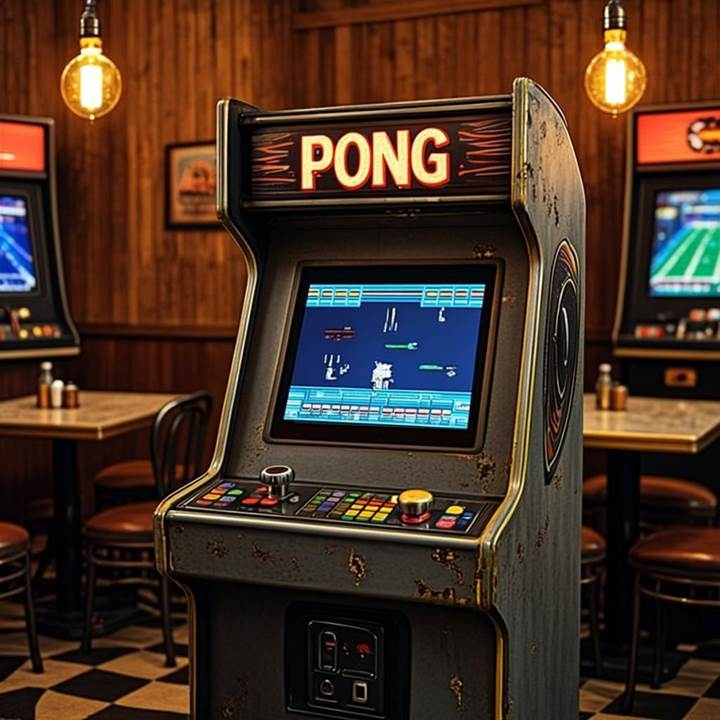
The history of level design begins, paradoxically, with a game that had no levels at all. When Allan Alcorn created Pong (https://en.wikipedia.org/wiki/Pong) for Atari in 1972, the concept of a “level” in the sense we understand it today simply did not exist. Pong consisted of a single, fixed playing field: a vertical dividing line, two paddles, and a bouncing ball. There were no platforms to jump across, no enemies to defeat, no hidden areas to discover. Yet within this stark simplicity lay the foundational principle that would come to define all level design: the arrangement of space directly shapes the player experience. The rectangular court of Pong established a sense of boundaries, competition, and spatial awareness that would be expanded upon by every game that followed.
I still remember the first time I saw Pong in an arcade cabinet at a local pizza parlor. I was perhaps six years old, and the simple act of moving a paddle to deflect a white square across a black screen felt like pure magic. The space was utterly minimal, yet the tension it generated was extraordinary. Two players, a ball, and a net — that was all it took to create an experience that was more engaging than most multimillion-dollar productions today. That moment crystallized something for me: great design is not about complexity; it is about the relationship between the player and the space they inhabit. Even in a featureless rectangle, the act of competing within defined boundaries created an emotional arc of anticipation, action, and reaction that kept players coming back for hours.
Space Invaders and the Vertical Scrolling Dawn
As the 1970s progressed, games began introducing increasingly complex spatial arrangements. Space Invaders (https://en.wikipedia.org/wiki/Space_Invaders) (1978) introduced the concept of a grid-based playing field where enemies moved in formation, gradually descending toward the player. This was a revolutionary step because it introduced vertical spatial tension: the player was no longer just competing in a flat plane but was being squeezed by an encroaching force. The four destructible shields at the bottom of the screen added a new layer of spatial strategy, giving players cover that eroded over time and forcing them to make tactical decisions about positioning and risk.
The late 1970s also saw the emergence of games with multiple distinct stages or areas. Asteroids (https://en.wikipedia.org/wiki/Asteroids) (1979) featured a wraparound playfield that effectively had no boundaries, challenging the notion that game spaces needed to be enclosed. Galaxian (https://en.wikipedia.org/wiki/Galaxian) (1979) introduced enemy ships that swooped down from their formation in complex flight patterns, adding a three-dimensional sense of movement to a two-dimensional playing field. These incremental innovations may seem modest by modern standards, but each one expanded the designer’s toolkit and deepened the relationship between the player and the virtual space they inhabited. They laid the groundwork for the explosion of creativity that would define the following decade.
3. The Golden Age of Arcade and Home Computing: The 1980s
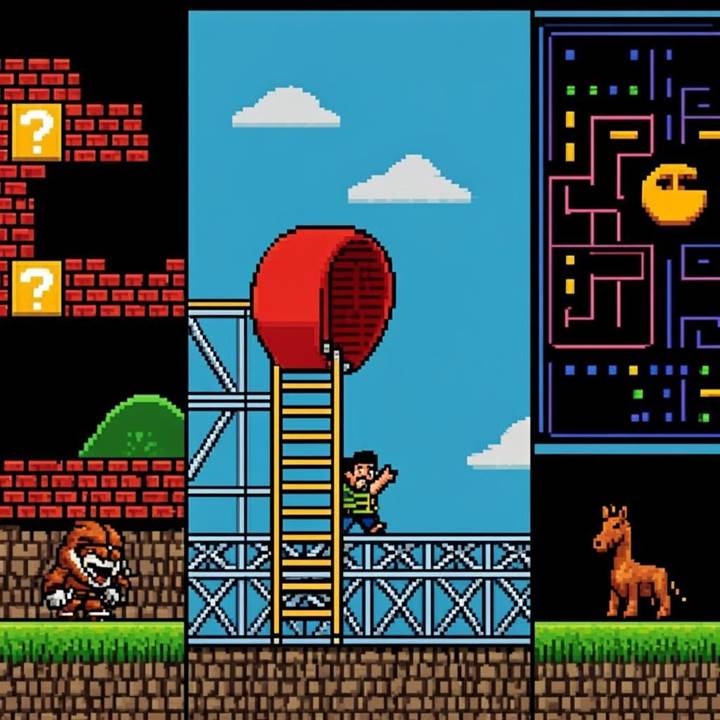
The golden age of 8-bit level design in the 1980s
Donkey Kong: The First True Level Designer
If Pong planted the seed of level design, then Donkey Kong (https://en.wikipedia.org/wiki/Donkey_Kong) (1981) was its first flowering. Designed by a young Shigeru Miyamoto at Nintendo, Donkey Kong featured four distinct levels, each with its own layout, hazards, and goals. This was revolutionary: for the first time, a game designer was creating unique spatial experiences that the player would progress through sequentially. The first level, with its sloped girders, rolling barrels, and a hammer power-up, taught players the game’s mechanics while simultaneously telling a story: a carpenter climbing a construction site to rescue his girlfriend from a giant ape.
Miyamoto’s approach was revolutionary because it prioritized the player’s emotional journey over technical complexity. Each of the four levels in Donkey Kong escalated in difficulty and introduced new mechanics: barrels on the first stage, conveyor belts and cement pies on the second, escalators on the third, and a final stage where removing rivets caused the platform to collapse. This progression — teach, then challenge — became the foundational template for level design that persists to this day. Miyamoto intuitively understood something that modern design theory would later formalize: that the first moments a player spends in a level are the most critical for establishing engagement and understanding. His work on Donkey Kong established principles of environmental storytelling, difficulty escalation, and player guidance that are still taught in game design programs worldwide.
Super Mario Bros. and the Template for Platformer Design
When Super Mario Bros. (https://en.wikipedia.org/wiki/Super_Mario_Bros.) launched alongside the Nintendo Entertainment System in 1985, it established a template for platformer level design that would influence generations of games to come. World 1-1, the game’s very first level, is now widely regarded by game designers and scholars as the most important level ever created. In just 30 seconds of playtime, it taught players every core mechanic of the game: running, jumping, hitting blocks, collecting coins, defeating enemies, and discovering hidden secrets — all without a single line of text or tutorial prompt. This level is a masterclass in what designers call “affordance,” where the visual design of the environment communicates how it should be interacted with.
This concept, now universally known in the industry as “show, don’t tell” level design, remains one of the most powerful tools in a level designer’s arsenal. The Goomba at the beginning of World 1-1 is placed so that the player is likely to hit it accidentally while learning to jump, teaching them both that enemies are dangerous and that jumping is the solution. The gap immediately afterward teaches the player that the same jump that defeats enemies can also clear obstacles. The question mark block introduces the power-up system. Each element builds upon the last in a seamless flow that feels natural and intuitive rather than instructional. This design philosophy — where the level itself serves as the tutorial — has been adopted by countless games since and is considered best practice in the industry.
The Rise of Maze and Dungeon Design
The 1980s also witnessed the birth of complex level design in genres beyond platformers. Games like Pac-Man (https://en.wikipedia.org/wiki/Pac-Man) (1980) featured intricate maze layouts where the topology of the space itself was the primary design challenge. The Pac-Man maze was not merely a container for gameplay; it was the gameplay. Every intersection represented a decision point, every tunnel offered a strategic escape route, and every power pellet placement was calculated to maximize tension and reward. The four ghost characters, each with distinct AI behaviors, transformed a simple maze into a dynamic, ever-changing strategic puzzle.
In the realm of role-playing games, titles like Ultima (https://en.wikipedia.org/wiki/Ultima_(series)) and The Legend of Zelda (https://en.wikipedia.org/wiki/The_Legend_of_Zelda) (1986) introduced the concept of dungeon design — enclosed, multi-room environments filled with puzzles, enemies, and treasures. Zelda’s dungeons were particularly influential, as each one was themed around a specific item or mechanic, and the level design was structured so that the player needed to understand that mechanic to progress. This created a tight feedback loop between exploration, comprehension, and reward that became the blueprint for action-adventure game design for decades to come. The dungeons of The Legend of Zelda were not just obstacles to overcome; they were carefully constructed learning experiences where every room served a purpose in teaching the player something new about the game world or their own abilities.
4. The 3D Revolution: The 1990s and the Birth of Modern Level Design

The 3D revolution: Doom, Quake, and Half-Life redefined spatial design
Doom, Quake, and John Romero’s Legacy
The transition from 2D to 3D gaming in the early 1990s represented the single greatest challenge in the history of level design. Suddenly, designers had to think in terms of depth, height, and full spatial awareness rather than the left-to-right progression of 2D games. id Software’s Doom (https://en.wikipedia.org/wiki/Doom_(1993_video_game)) (1993) was a watershed moment in this transition. Although technically rendered in a 2.5D engine, Doom’s levels introduced players to the concept of navigating complex, three-dimensional environments with varying elevations, corridors, rooms, and hidden passages. John Romero, the lead level designer on Doom, created levels that were not just mazes but carefully orchestrated sequences of combat, exploration, and discovery.
The levels in Doom were masterful studies in pacing and player psychology. Romero understood that players needed moments of intense action punctuated by quieter periods of exploration and resource gathering. He used architectural details like lighting changes, sound cues, and visual landmarks to guide players through levels without explicit indicators. A red keycard visible through a window would draw the player’s eye and encourage them to find the corresponding door. The distant sound of monster growling would build anticipation and tension. These techniques, now considered fundamental to level design, were being pioneered in real-time by the id Software team.
When Quake (https://en.wikipedia.org/wiki/Quake_(video_game)) arrived in 1996, it pushed 3D level design even further with true 3D environments featuring rooms above rooms, underwater sections, and complex vertical spaces. The level design of Quake demanded a completely new way of thinking about spatial navigation, and the designers at id Software rose to the challenge with environments that felt genuinely three-dimensional for the first time in gaming history. The game’s darker, more atmospheric aesthetic also influenced a generation of level designers to think about environmental storytelling and mood creation as integral parts of the design process.
Super Mario 64 and the Open-Arena Blueprint
Nintendo’s Super Mario 64 (https://en.wikipedia.org/wiki/Super_Mario_64) (1996) tackled the challenge of 3D level design from a completely different angle than the FPS genre. Rather than guiding players through linear corridors, it placed them in open, explorable arenas where they had the freedom to approach objectives in multiple ways. Each of the game’s 15 courses was designed around a central theme — a castle courtyard, a sunken ship, a snowy mountain — and contained seven stars that could be collected in any order. This non-linear structure required a fundamentally different approach to level design, one that emphasized player agency and environmental clarity over controlled pacing.
What made Super Mario 64’s level design so influential was its emphasis on player agency within a defined space. Unlike Doom, which guided players along a largely linear path, Super Mario 64 gave players the freedom to explore and discover objectives organically. The game’s camera system, which allowed players to adjust their view, was itself a level design tool, as it meant designers could no longer control what the player saw at any given moment. Every element of a level needed to be readable and understandable from multiple angles and distances, a principle that remains essential in open-world and 3D game design to this day.
Half-Life and Narrative Level Design
When Half-Life (https://en.wikipedia.org/wiki/Half-Life_(video_game)) launched in 1998, it fundamentally changed the relationship between level design and storytelling. Before Half-Life, most games used cutscenes and dialogue boxes to advance their narratives, with levels serving primarily as gameplay containers. Half-Life eliminated cutscenes entirely, instead using the environment itself to tell the story. The player experienced the entire game in first-person, with events unfolding around them in real-time. This approach, now known as “environmental narrative design,” required a completely new level of sophistication from level designers.
The Black Mesa Research Facility, Half-Life’s setting, was one of the first game environments designed to feel like a real, functioning place. Offices had desks with personal items, cafeterias had vending machines, and storage rooms were filled with crates and equipment. This attention to environmental detail served a dual purpose: it made the world feel believable and immersive, and it provided the player with information about the story and characters without breaking the gameplay flow. When the resonance cascade disaster struck, the player’s familiarity with the environment made the destruction all the more impactful, as rooms they had explored in safety became hazardous, alien-infested nightmares. This integration of narrative and spatial design became a defining principle of the FPS genre and influenced countless games that followed.
5. The Open World Renaissance: The 2000s

The open world revolution of the 2000s redefined player freedom
Grand Theft Auto III and the 3D Sandbox
The release of Grand Theft Auto III (https://en.wikipedia.org/wiki/Grand_Theft_Auto_III) in 2001 marked a paradigm shift in level design philosophy. For the first time, players were given access to a fully realized, three-dimensional open world — the fictional Liberty City — and were free to explore it at their own pace. This presented an entirely new set of challenges for level designers. How do you guide a player through a narrative experience when they can go anywhere at any time? How do you maintain pacing and difficulty progression in a nonlinear environment? How do you ensure the player discovers the content you have created?
The level design of GTA III introduced challenges that designers had never faced before. How do you guide a player through a narrative in a world with no barriers? The solution was a combination of subtle environmental cues, mission markers on the mini-map, and the design of the city itself. Roads naturally funneled players toward key locations, and the layout of neighborhoods created a sense of place that helped players navigate intuitively. The mission structure was linear, but the space between missions was completely open, allowing players to engage with the world on their own terms. This balance between narrative progression and player freedom became the blueprint for the entire open-world genre, influencing games from The Elder Scrolls V: Skyrim to The Witcher 3: Wild Hunt.
Halo: Combat Evolved and the Arena Shooter
While Rockstar was redefining the open world, Bungie (https://en.wikipedia.org/wiki/Bungie) was revolutionizing level design for first-person shooters with Halo: Combat Evolved (https://en.wikipedia.org/wiki/Halo:_Combat_Evolved) (2001). Halo’s campaign levels were designed around what Bungie called the “30 seconds of fun” principle: a repeating loop of combat encounters that could be approached from multiple angles using the game’s three-weapon system, grenade mechanics, and vehicle combat. Each encounter area was designed like a small arena, with multiple entry points, elevation changes, and cover positions that encouraged players to experiment with different tactics.
Perhaps even more influential were Halo’s multiplayer maps. Levels like Blood Gulch (https://www.ign.com/videos/ign-ranks-the-top-10-halo-multiplayer-maps) and Hang ‘Em High became iconic for their elegant simplicity and perfect balance of sight lines, cover, and movement options. These maps demonstrated that great multiplayer level design requires a deep understanding of player flow, spawn positioning, and weapon placement — skills that are fundamentally different from single-player level design. The competitive multiplayer design principles established by Halo continue to influence the design of multiplayer shooters today, from Call of Duty to Apex Legends.
Portal: Redefining Puzzle Level Design
No discussion of 2000s level design would be complete without Portal (https://en.wikipedia.org/wiki/Portal_(video_game)) (2007). Developed by Valve as part of The Orange Box, Portal took the concept of puzzle-based level design to its most elegant extreme. The entire game was built around a single mechanic — the placement of two interconnected portals on walls, floors, and ceilings — and every level was designed to teach the player a new application of that mechanic. The result was one of the most tightly designed games in history, where each level built logically upon the last, culminating in a series of challenges that required the player to combine everything they had learned in creative and unexpected ways.
This achievement illustrates a crucial principle of level design: that the arrangement of physical space can evoke deep intellectual engagement and emotional response. Portal’s levels were not merely puzzles to be solved; they were experiences that made players feel clever, empowered, and genuinely delighted by their own problem-solving abilities. The famous “companion cube” level demonstrated how level design could create an emotional attachment between a player and an inanimate object, simply by giving that object a prominent role in the level’s puzzle mechanics and then forcing the player to sacrifice it to progress. This brilliant combination of spatial reasoning and emotional manipulation through environmental design remains a masterclass in what the medium can achieve.
6. The Modern Era: The 2010s and the Age of Immersion

Dark Souls and Elden Ring: masterpieces of environmental storytelling
Dark Souls and Environmental Storytelling
From Software’s Dark Souls (https://en.wikipedia.org/wiki/Dark_Souls) (2011) represented a radical departure from the hand-holding trend in modern game design. Its interconnected world, built around the hub of Firelink Shrine, was a masterwork of spatial design that rewarded exploration and observation. Unlike most games of the era, Dark Souls provided no map, no objective markers, and no explicit guidance. Players had to navigate using landmarks, visual cues, and their own spatial memory. This approach created a profound sense of discovery and accomplishment when players finally pieced together the world’s geography and shortcuts.
Dark Souls’ level design communicated lore and narrative entirely through the environment. Item placements, enemy configurations, and architectural details all told stories that were never explicitly stated. A room filled with hollowed soldiers surrounding a treasure chest told a story of greed and desperation. A weapon planted in a boss’s corpse hinted at a previous adventurer’s failed attempt. This environmental storytelling technique, combined with the game’s punishing difficulty, created one of the most devoted communities in gaming history. Players shared discoveries, debated lore interpretations, and created detailed maps of the game’s interconnected world, all based purely on environmental evidence. The Dark Souls approach to level design proved that players are more than capable of understanding and navigating complex spaces when the design is thoughtful and consistent.
The Legend of Zelda: Breath of the Wild and Systemic Design
When Nintendo released The Legend of Zelda: Breath of the Wild (https://en.wikipedia.org/wiki/The_Legend_of_Zelda:_Breath_of_the_Wild) in 2017, it challenged virtually every assumption about open-world level design. Rather than filling its map with icons and objectives, Breath of the Wild created a world where the level design emerged from the interaction of systemic mechanics. Fire spread through grass, creating updrafts that the player could glide on. Metal conducted electricity during thunderstorms. Water froze in cold environments, creating ice platforms that could be climbed. The “levels” were not pre-designed challenges but emergent situations created by the interplay of these systems.
The game’s shrines, over 120 small puzzle rooms scattered across the open world, served as focused level design challenges that taught players how to use specific mechanics. Each shrine was a self-contained puzzle designed around a single concept, from manipulating time to using magnetism to create bridges. This combination of systemic open-world design and focused puzzle challenges created a level design structure that was both expansive and intimate, offering players the freedom to explore a vast world while also providing carefully crafted puzzles that tested their mastery of the game’s mechanics. The design philosophy of Breath of the Wild has been enormously influential, inspiring countless open-world games to prioritize player agency and emergent gameplay over scripted sequences.
Elden Ring: The Pinnacle of Open-World Architecture
From Software’s Elden Ring (https://en.wikipedia.org/wiki/Elden_Ring) (2022), created in collaboration with George R.R. Martin, took the environmental design principles of the Souls series and applied them on an unprecedented scale. The Lands Between, the game’s open world, was meticulously designed to reward exploration at every turn. Visible landmarks — towering castles, mysterious ruins, glowing trees — drew players toward points of interest without explicit markers. The world felt handcrafted despite its massive size, with every area containing secrets, shortcuts, and surprising encounters that rewarded curiosity and careful observation.
The legacy dungeons in Elden Ring, such as Stormveil Castle and the Royal Capital, demonstrate how linear level design can coexist with open-world exploration. These dungeons were designed with the same meticulous attention to vertical space, enemy placement, and environmental storytelling that characterized earlier Souls games, but they were embedded within a vast open world that players could approach in any order. This hybrid approach — open-world exploration combined with focused, handcrafted dungeon experiences — has been widely praised as one of the most effective level design structures in modern gaming, offering both the freedom of exploration and the satisfaction of carefully designed challenge sequences.
7. Legendary Level Designers Who Shaped the Industry
The evolution of level design has been driven by visionary individuals whose creative instincts and technical innovations transformed the medium. These designers not only created memorable gaming experiences but also established design principles and methodologies that continue to influence the industry today. Their work demonstrates that level design is ultimately a deeply personal art form, where individual creativity and vision can shape the experiences of millions of players around the world.
Shigeru Miyamoto: The Father of Modern Level Design
Born in November 1952 in Kyoto, Japan, Shigeru Miyamoto (https://en.wikipedia.org/wiki/Shigeru_Miyamoto) is widely regarded as the most influential game designer in history. His work on Donkey Kong, Super Mario Bros., The Legend of Zelda, and countless other Nintendo franchises established foundational principles of level design that remain relevant today. Miyamoto’s approach to level design was always rooted in his childhood experiences exploring the caves, forests, and rivers around his hometown of Sonobe. He believed that the sense of wonder and discovery he felt as a child exploring natural environments could be recreated in virtual spaces, and this philosophy drove the design of some of gaming’s most beloved worlds.
Miyamoto’s most significant contribution to level design was his insistence that the game world itself should teach the player how to play. The concept of “teaching through play” — where the level design introduces mechanics progressively without relying on text tutorials or explicit instructions — was pioneered by Miyamoto and has become a cornerstone of modern game design. His work demonstrated that great level design is invisible: when a player intuitively understands where to go and what to do without being told, the level designer has succeeded. This principle, now taught in every game design program in the world, traces its direct lineage back to Miyamoto’s work at Nintendo in the 1980s.
John Romero: The Rockstar of Level Design
As the co-founder of id Software and the lead designer on Doom and Quake, John Romero (https://book.leveldesignbook.com/culture/history-level-design) became one of the most recognizable figures in the game industry during the 1990s. His level design work on Doom defined the first-person shooter genre and established design principles for 3D spatial navigation that are still used today. Romero’s approach was characterized by a focus on pacing, flow, and the emotional rhythm of gameplay. He understood that players needed variety — moments of intense combat followed by exploration, surprise encounters followed by careful planning — and he structured his levels to deliver these experiences with precision.
Romero’s influence extended beyond his own games. The tools and techniques he developed at id Software — including the concept of the level editor itself — empowered a generation of designers to create their own levels and share them with the world. The modding community that grew up around Doom and Quake produced some of the most talented level designers in the industry, many of whom went on to work at major studios. Romero’s advocacy for accessible design tools and his belief in the creative potential of players helped establish the modding culture that remains vital to the game industry today, with games like Counter-Strike, Dota 2, and PlayerUnknown’s Battlegrounds all tracing their origins to community-made mods.
Hideo Kojima: The Cinematic Level Designer
While primarily known as a game director and writer, Hideo Kojima (https://en.wikipedia.org/wiki/Hideo_Kojima)’s influence on level design has been profound. The Metal Gear Solid series pioneered the use of cinematic camera angles, environmental storytelling, and multi-path level design in ways that influenced the entire industry. Kojima’s levels were designed to support narrative moments, with spaces crafted to accommodate specific camera angles, dialogue sequences, and gameplay set-pieces. This integration of cinematic storytelling and interactive level design created experiences that felt like playable movies, a design philosophy that has been adopted by countless action games since.
Kojima’s most innovative contribution to level design was his emphasis on player choice within narrative spaces. In Metal Gear Solid, players could approach encounters using stealth, combat, or a combination of both, and the level design supported all of these approaches simultaneously. Air vents, hidden paths, and environmental hazards provided multiple solutions to every obstacle, encouraging players to experiment and find their own preferred playstyle. This multi-path design philosophy has become a standard feature of modern action games, from Dishonored to Deus Ex, and traces its lineage directly back to Kojima’s work on the Metal Gear Solid series.
Cliff Bleszinski: The Multiplayer Architect
Known to the gaming community as “CliffyB,” Cliff Bleszinski (https://en.wikipedia.org/wiki/Cliff_Bleszinski) made his mark on level design through his work on the Unreal Tournament and Gears of War series. Bleszinski’s approach to multiplayer map design was characterized by a focus on flow, sight lines, and the relationship between movement mechanics and spatial design. His maps for Unreal Tournament were celebrated for their tight, arena-style layouts that rewarded skillful movement and positioning, while his work on Gears of War introduced the concept of “cover-based” level design, where the placement of chest-high walls and other cover objects defined the combat flow.
Bleszinski’s philosophy of multiplayer design centered on the concept of “combat bowls” — open areas where multiple combat encounters could overlap, creating dynamic, unpredictable gameplay situations. He understood that great multiplayer levels need to create spaces where no single position is overwhelmingly advantageous, where players are constantly moving and adapting, and where the layout itself generates interesting tactical decisions. This philosophy influenced the design of competitive multiplayer maps across multiple genres, from first-person shooters to battle royale games, and his principles of flow, balance, and dynamic encounter design remain essential reading for aspiring multiplayer level designers.
8. Core Principles of Great Level Design
After decades of evolution, the game design community has identified several fundamental principles. According to Game Developer Magazine (https://www.gamedeveloper.com/design/ten-principles-of-good-level-design), these principles form the foundation upon which all great level design is built, regardless of genre, platform, or era. Understanding these principles is essential for anyone who wishes to create compelling game spaces, and they apply equally to 2D platformers, 3D open worlds, puzzle games, and everything in between.
Visual Guidance and Affordance
One of the most critical skills in a level designer’s toolkit is the ability to guide the player’s eye without explicit instructions. Visual guidance can be achieved through lighting, color contrast, architectural lines, and environmental landmarks. According to Hitem3d.ai (https://www.hitem3d.ai/blog/en-Level-Design-Fundamentals-2024), effective visual guidance creates a subconscious flow that directs players toward objectives while making them feel like they are exploring freely. The key is to create a hierarchy of visual information: the most important elements should be the most visually prominent, while secondary details should recede into the background.
Affordance, a concept borrowed from psychology, refers to the visual cues that communicate how an object or surface can be interacted with. A ledge at waist height affords climbing; a crack in a wall affords investigation; a glowing switch affords activation. Great level designers use affordance to communicate gameplay possibilities without text prompts or tutorial pop-ups. When a player sees a rope hanging from a ceiling, they should immediately understand that it can be swung on. When they see a vent cover with screws, they should intuit that it can be removed. This seamless communication between designer and player through the environment is what separates good level design from great level design.
Flow and Pacing
The rhythm of a level — its alternation between tension and release, action and exploration — is what designers call “flow and pacing.” According to PixelField (https://pixelfield.co.uk/blog/level-design-principles), a well-paced level takes the player on an emotional journey, building to climactic moments of intense challenge and then providing relief through quieter exploration or narrative sequences. This rhythm prevents fatigue and maintains engagement over extended play sessions. The best levels create a sense of momentum that carries the player forward, making them eager to see what lies around the next corner.
Flow also refers to the physical movement of the player through the space. A level with good flow has clear paths between areas, avoids dead ends that frustrate the player, and provides visual cues about where to go next. The concept of “flow” was popularized by psychologist Mihaly Csikszentmihalyi, who described it as a state of complete absorption in an activity. Great level design aims to create this state by matching the difficulty of challenges to the player’s growing skill level, ensuring that the player is neither bored nor overwhelmed at any point during their journey through the level. This careful calibration of challenge and ability is what makes a level feel “just right” — difficult enough to be engaging but not so difficult as to be frustrating.
Environmental Storytelling
The most memorable levels tell stories through their environments without a single line of dialogue. A table set for two with one chair knocked over suggests a struggle. A child’s bedroom with toys scattered around implies a hasty departure. Blood trails leading to a locked door create suspense about what lies behind it. Environmental storytelling is the art of using the physical details of a space to communicate narrative information, and it is one of the most powerful tools available to level designers. It engages the player’s imagination and makes them an active participant in uncovering the story.
This technique is particularly effective because it respects the player’s intelligence. Rather than telling the player what happened through a cutscene or dialogue, environmental storytelling shows them the evidence and allows them to draw their own conclusions. This creates a deeper sense of engagement and investment in the world, as the player feels like they are discovering the story rather than being told it. Games like Dark Souls, Bioshock, and Gone Home have elevated environmental storytelling to an art form, creating rich, layered narratives that exist entirely within the physical details of their environments.
Player Choice and Emergence
Modern level design increasingly emphasizes giving players meaningful choices about how they navigate and interact with the environment. This can take many forms: multiple paths through a level, different approaches to combat encounters, optional areas that reward exploration, or systemic mechanics that allow creative problem-solving. According to the Generalist Programmer (https://generalistprogrammer.com/tutorials/game-level-design-complete-guide), emergence — where player actions combine with systemic game mechanics to create unscripted, surprising situations — is one of the most exciting frontiers in modern level design.
The challenge of designing for player choice is ensuring that every viable path is engaging, well-designed, and provides a satisfying experience. A level with three paths is only as good as its weakest path — if one route is clearly superior to the others, the illusion of choice collapses. Great level designers create spaces where multiple approaches are equally valid but feel different, ensuring that each player’s journey through the level is unique while still delivering the intended emotional and gameplay experience. This requires extensive playtesting and iteration, as players will invariably find approaches that the designer did not anticipate, and the level must accommodate these emergent behaviors gracefully.
Challenge Balance and the Difficulty Curve
A great level challenges the player without frustrating them. This balance is achieved through careful tuning of enemy placement, resource distribution, obstacle complexity, and the introduction of new mechanics. The difficulty curve — the rate at which challenges increase in difficulty over the course of a game or level — is one of the most critical elements of game design. Too steep a curve alienates casual players, while too gentle a curve bores experienced ones. The best levels manage to accommodate a range of skill levels by providing optional challenges and multiple difficulty tiers within the same space.
The concept of the “difficulty curve” is closely related to the psychological concept of “flow.” As a player becomes more proficient with a game’s mechanics, the challenges they face should increase proportionally to maintain engagement. This is why many games introduce new enemies, obstacles, or mechanics at regular intervals — not only to keep the gameplay fresh but also to ensure that the player is constantly learning and adapting. The art of difficulty balancing lies in creating challenges that feel fair, even when the player fails. When a player dies in a well-designed level, they should understand why they failed and feel motivated to try again, not frustrated by unfair or arbitrary obstacles.
9. Iconic Levels That Defined Generations
Certain levels have transcended their games to become cultural touchstones, referenced and celebrated decades after their release. According to 24/7 Wall St. (https://247wallst.com/media/2024/08/15/most-memorable-video-game-levels/), these iconic levels represent the pinnacle of level design achievement, each one pushing the boundaries of what was possible in its era and establishing design principles that continue to influence the industry today.
| Level | Game (Year) | Why It’s Iconic |
| World 1-1 | Super Mario Bros. (1985) | Perfect tutorial-through-play; taught millions the basics of platformers without a single word |
| E1M1: Hangar | Doom (1993) | Defined FPS level pacing; masterful balance of combat, exploration, and secrets |
| Blood Gulch | Halo: CE (2001) | Iconic multiplayer arena; perfect vehicle-infantry balance and asymmetric gameplay |
| The Companion Cube | Portal (2007) | Emotional puzzle design; made players care about an inanimate object through spatial storytelling |
| Anor Londo | Dark Souls (2011) | Interconnected architecture; breathtaking vertical design that rewarded exploration |
| The Great Plateau | Zelda: BotW (2017) | Systemic design masterclass; a sandbox that taught emergent gameplay |
| Stormveil Castle | Elden Ring (2022) | Best legacy dungeon; linear precision within an open world |
| Dust II | Counter-Strike (2000) | Most played competitive map; balanced angles, mid control, and Bombsite strategies |
| The Library | Halo: CE (2001) | Thrilling gauntlet design; claustrophobic corridors vs. massive Flood encounters |
| World 8-4 | Super Mario Bros. (1985) | The ultimate challenge; every lesson from the game combined into one punishing finale |
Each of these levels represents a breakthrough in some aspect of level design. World 1-1 perfected teaching through play; Anor Londo demonstrated the power of vertical interconnected architecture; The Great Plateau showed how systemic mechanics could create emergent gameplay experiences; and Stormveil Castle proved that focused, handcrafted level design could coexist with open-world exploration. Together, they form a curriculum of level design excellence that aspiring designers study and reference throughout their careers.
10. Tools and Technologies of Modern Level Design
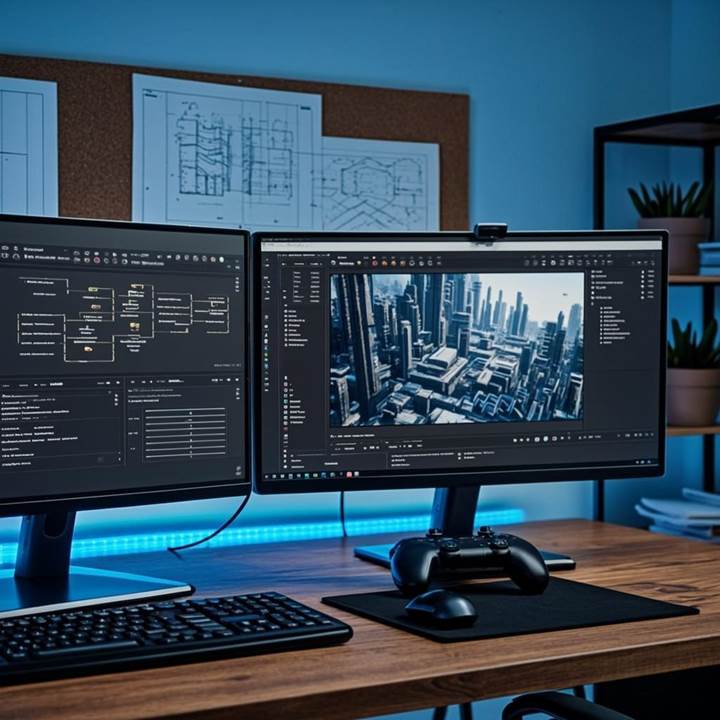
Modern level design tools: Unreal Engine, Unity, and AI-assisted workflows
Today’s level designers work with sophisticated software suites that combine 3D modeling, lighting, scripting, and real-time preview capabilities. The tools available to designers have evolved dramatically from the simple grid editors of the 1990s, and modern engines provide features that would have been unimaginable to early level designers. Understanding these tools is essential for anyone pursuing a career in the field, as proficiency with industry-standard software is a prerequisite for employment at most game studios.
Unreal Engine and Unreal Editor
Epic Games’ Unreal Engine (https://www.unrealengine.com) remains the gold standard for AAA level design. Unreal Engine 5, released in 2022, introduced Nanite (a virtualized micropolygon geometry system) and Lumen (a fully dynamic global illumination solution) that fundamentally changed how level designers approach environmental creation. With Nanite, designers can import film-quality assets directly into their levels without worrying about polygon counts or LOD (Level of Detail) management. Lumen eliminates the need for pre-baked lighting, allowing designers to make real-time changes to lighting and immediately see the results. These technologies have dramatically reduced the iteration time for level designers, allowing them to experiment more freely and iterate faster.
Unreal Editor, the level design component of Unreal Engine, provides a comprehensive suite of tools including a visual scripting system called Blueprints, a terrain editor, a foliage painting system, and a real-time material editor. The introduction of MetaHuman Creator has also streamlined the process of populating levels with realistic NPCs. Unreal Engine’s marketplace offers thousands of pre-made assets, materials, and environment templates that level designers can use as building blocks, accelerating the prototyping phase of level development. The engine’s robust networking support also makes it an excellent choice for multiplayer level design, with built-in tools for testing network replication and player movement prediction.
Unity and the Versatile Workflow
Unity Technologies’ Unity (https://unity.com/resources/introduction-to-level-design-in-game-development-and-in-unity) enables a versatile level design workflow that has made it the most popular game engine among independent developers and educational institutions. Unity’s component-based architecture allows designers to quickly prototype levels using a library of pre-built behaviors and physics components. The Unity Asset Store provides an extensive library of 3D models, textures, scripts, and tools that can dramatically accelerate the level design process, especially for smaller teams and solo developers working with limited resources.
Unity’s real-time rendering capabilities, particularly the High Definition Render Pipeline (HDRP), allow level designers to create visually stunning environments that rival AAA productions. The engine’s support for multiple platforms — including PC, consoles, mobile devices, and VR headsets — makes it an ideal choice for designers who want their levels to reach the widest possible audience. Unity’s Tilemap system is particularly useful for 2D level design, allowing designers to paint tile-based levels using a visual editor. The engine’s recent introduction of Unity 6, with enhanced rendering capabilities and improved performance for open-world scenes, has further cemented its position as a versatile tool for level designers working across multiple genres and platforms.
Hammer Editor and the Source Engine Legacy
Valve’s Hammer Editor remains beloved by a dedicated community of level designers. Its grid-based approach to geometry creation provides precise control over spatial layouts, making it particularly well-suited for the architectural, interior-focused levels that characterize Valve’s game design philosophy. Although the Source 2 engine and its associated tools have largely superseded the original Source engine, Hammer’s influence on level design tooling is immeasurable — many of the conventions it established, such as the concept of brush-based geometry and visgroup organization, are still present in modern tools.
Hammer Editor’s grid-based approach to level design, where spaces are constructed by combining simple geometric shapes (brushes), teaches designers to think about space in terms of solid volumes and void. This is a fundamentally different way of thinking about level design compared to the mesh-based approach used by modern engines, and many designers find that learning to build levels in Hammer gives them a deeper understanding of spatial composition. The editor’s tight integration with Valve’s game design philosophy — particularly its emphasis on environmental storytelling and player-guided navigation — has produced some of the most memorable levels in gaming history, from the corridors of Half-Life 2 to the puzzle chambers of Portal.
Procedural Tools and AI-Assisted Design
According to Analytics Vidhya (https://www.analyticsvidhya.com/blog/2023/03/ml-and-ai-in-game-development), Procedural Content Generation (PCG) tools powered by machine learning are increasingly becoming part of the level designer’s toolkit. Tools like Houdini, which uses a node-based procedural workflow, allow designers to create rule-based systems that can generate complex environments automatically. This is particularly useful for creating large-scale environments — forests, cities, terrain — that would be prohibitively time-consuming to build by hand. The key advantage of procedural tools is that they allow designers to define rules and parameters rather than placing every individual element, enabling rapid iteration and experimentation.
AI-assisted design tools are also beginning to make their mark. Platforms like Meshy.ai (https://www.meshy.ai/blog/level-design) use generative AI to create 3D assets from text descriptions, dramatically reducing the time required to populate levels with environmental detail. Other tools use machine learning to analyze playtest data and suggest layout improvements. While these tools are not yet sophisticated enough to replace human designers, they are increasingly valuable as aids in the creative process, handling routine tasks and providing data-driven insights that help designers make more informed decisions. The integration of AI into the level design workflow represents a fundamental shift in how games are made, and designers who embrace these tools will have a significant advantage in the coming years.
11. Artificial Intelligence and the Future of Level Design

AI-driven procedural generation is shaping the future of level design
The integration of artificial intelligence into the level design workflow represents the most significant evolution in the field since the transition from 2D to 3D. According to DarkCore (https://www.darkcore.net/ai-in-game-development-redefining-gaming-2026/), AI technologies are poised to transform every aspect of level design, from initial concept to final polish. The potential applications range from automating routine tasks like vegetation placement and terrain texturing to generating entire game worlds from high-level design specifications. This transformation is not about replacing human designers but about augmenting their capabilities, allowing them to focus on the creative and strategic aspects of design while AI handles the labor-intensive implementation work.
Procedural Content Generation (PCG)
Modern PCG powered by machine learning represents a qualitative leap beyond early systems. According to IEEE’s research on generative AI in procedural content (https://ieeexplore.ieee.org/document/11144949), neural networks can now generate level layouts that are functionally equivalent to human-designed levels, maintaining proper difficulty curves, visual coherence, and spatial flow. Games like No Man’s Sky have already demonstrated the potential of PCG to create vast, explorable universes, and the technology is only improving. The next generation of PCG tools will be able to generate levels that adapt in real-time to the player’s skill level and playstyle, creating personalized experiences that are unique to each player.
The most promising applications of PCG lie in hybrid approaches that combine procedural generation with human oversight. In this model, AI generates a base level layout that a human designer then refines, adjusting the placement of key elements, adding narrative touches, and ensuring that the level meets the specific creative vision for the game. This collaborative approach leverages the speed and scalability of AI while preserving the artistic judgment and creative intuition that only human designers can provide. Several major studios are already experimenting with this workflow, and early results have been extremely promising, with significant reductions in development time and improvements in level variety and replayability.
AI-Assisted Playtesting and Iteration
AI is increasingly being used to simulate player behavior, allowing designers to identify potential issues before investing in expensive human playtesting sessions. According to Analytics Vidhya’s 2026 report on machine learning in game development (https://www.analyticsvidhya.com/blog/2023/03/ml-and-ai-in-game-development), AI agents can play through levels thousands of times, generating heatmaps of player movement, identifying common failure points, and suggesting layout adjustments to improve flow and balance. This data-driven approach to level design iteration represents a fundamental shift from the traditional method of relying primarily on human playtest feedback, which is inherently limited by sample size and subjectivity.
AI playtesting also enables designers to test how levels perform across a wide range of player skill levels and playstyles, something that would require prohibitively large human playtest groups. By analyzing the paths that AI agents take through a level, designers can identify areas where players might get lost, spots where the difficulty spikes unexpectedly, or routes that bypass intended challenges. This information allows for more targeted iteration, resulting in levels that provide a more consistent and polished experience for players of all skill levels. The combination of AI playtesting with traditional human playtesting creates a comprehensive feedback loop that produces better-designed levels in less time.
Generative AI for Concept and Blockout
Text-to-image and text-to-3D AI tools are rapidly improving. Tools like Meshy.ai (https://www.meshy.ai/blog/level-design) enable level designers to quickly generate concept art and 3D blockout geometry from text prompts, dramatically accelerating the early stages of the design process. Instead of spending days or weeks creating concept art and grey-box layouts by hand, designers can now generate dozens of potential layouts and visual directions in a matter of hours. This rapid prototyping capability allows for more exploration of creative ideas and more iteration before committing to a final design direction, which ultimately leads to better-designed levels.
The integration of generative AI into the level design workflow is still in its early stages, but the trajectory is clear. As these tools become more sophisticated and better integrated with professional game engines, they will become an indispensable part of the level designer’s toolkit. Designers who learn to work effectively with AI tools — understanding their capabilities and limitations, crafting effective prompts, and critically evaluating AI-generated outputs — will have a significant advantage in the job market. The future of level design is not AI versus humans but humans working in partnership with AI, each contributing their unique strengths to create experiences that neither could achieve alone.
12. GTA VI and the Next Frontier: Blockbuster Level Design in 2026

GTA VI’s Vice City: the next frontier of open-world level design
As of April 2026, the gaming world awaits the release of Grand Theft Auto VI (https://www.imdb.com/list/ls565219437), expected to launch in late 2026 for PlayStation 5 and Xbox Series X/S. Based on the information released by Rockstar Games so far, GTA VI promises to push the boundaries of open-world level design to unprecedented levels. The game is set in a reimagined Vice City inspired by Miami, featuring a sprawling urban environment with detailed interiors, a living ecosystem of NPCs with individual behaviors and schedules, and a level of environmental detail that rivals real-world cities. The game’s world is reportedly the largest and most detailed in Rockstar’s history, with every building, street, and intersection designed to support both the narrative experience and emergent player-driven gameplay.
Beyond GTA VI, other highly anticipated 2026 releases are pushing level design in exciting new directions. Marvel 1943: Rise of Hydra (https://www.nme.com/features/gaming-features/new-games-2026-release-dates-calendar-3646381) is exploring narrative-driven level design within a historically inspired World War II setting, while indie titles continue to innovate with procedural generation and systemic design. The diversity of approaches to level design in 2026 — from massive open worlds to focused, handcrafted experiences — demonstrates the maturity and breadth of the discipline. Whether working with billion-dollar budgets or small team resources, level designers in 2026 have access to more tools, knowledge, and creative freedom than at any point in the medium’s history.
I remember playing Vice City for the first time in 2002, driving down Ocean Drive with the radio blaring 1980s pop music, and feeling like I had been transported to another world. The neon-soaked streets, the pastel-colored art deco buildings, the constant thrum of activity — it was a level design achievement that made the city itself feel like a living character. If GTA VI can recapture that magic with modern technology, with fully explorable interiors, dynamic weather systems, and AI-driven NPC populations, it could represent the pinnacle of open-world level design. The anticipation surrounding the game speaks to the profound impact that great level design can have on players, creating virtual worlds that feel so real and so immersive that they become places players genuinely care about visiting and exploring.
13. How to Get Started in Level Design: A Practical Guide

Getting started in level design: from modding to professional tools
Learn the Fundamentals Through Modding
The single best way to learn level design is by doing it, and modding existing games provides the lowest barrier to entry. Games like Half-Life 2 (Source SDK), Doom (GZDoom Builder), and Skyrim (Creation Kit) have robust modding tools that allow aspiring designers to create and share their own levels. The modding community is one of the most supportive and knowledgeable in the game industry, and the feedback you receive from players is invaluable for developing your design instincts. Many professional level designers got their start creating mods, and the skills you develop — spatial reasoning, player psychology, technical proficiency with level editors — are directly transferable to professional work.
Starting with modding also teaches you the importance of player feedback. When you release a level to the public, you will quickly learn which design decisions work and which do not. Players will find exploits you never anticipated, get stuck in places you thought were obvious, and discover shortcuts you never intended. This feedback loop is essential for developing the iterative design mindset that separates professional designers from amateurs. The ability to analyze player feedback, identify the root causes of design problems, and implement effective solutions is a skill that can only be developed through practice, and modding provides the perfect training ground for this process.
Study Architecture and Environment Design
Level design is, at its core, a form of architecture. Studying real-world architectural principles — from the way shopping malls guide foot traffic to how museum curators create narrative flow through exhibition spaces — can provide invaluable insights into how people navigate and experience physical spaces. Visit interesting buildings, take photographs of spatial compositions that catch your eye, and analyze why certain environments feel inviting while others feel oppressive. This real-world study will inform your virtual designs in ways that no tutorial or textbook can, giving you an intuitive understanding of how space affects human emotion and behavior.
Beyond architecture, studying urban planning, landscape design, and interior design can also enrich your level design practice. Urban planning teaches you about the relationship between different types of spaces — residential, commercial, recreational — and how they connect to create functional communities. Landscape design provides insights into how natural features like elevation changes, water features, and vegetation can be used to guide movement and create visual interest. Interior design offers lessons in lighting, color theory, and the arrangement of furniture and objects to create mood and communicate function. The more you study the physical world around you, the richer and more believable your virtual environments will become.
Master Professional Tools
As mentioned in the Tools section, Unreal Engine (https://www.unrealengine.com) and Unity (https://unity.com) are the industry standards for game development. Both offer free versions for students and independent developers, making them accessible to anyone willing to invest the time to learn. Start with Unreal Engine if you are interested in AAA-level visual fidelity, or Unity if you are interested in a versatile, cross-platform workflow. Regardless of which engine you choose, focus on mastering the core skills of level design: spatial composition, lighting, material application, and gameplay scripting. Online courses, tutorials, and community forums provide excellent learning resources for aspiring designers.
In addition to game engines, proficiency with 3D modeling software such as Blender (which is free and open source) or Maya is increasingly important for level designers. The ability to create custom props, architectural elements, and environmental details gives you much greater creative control over your levels. Familiarity with 2D painting software like Photoshop or Krita is also valuable for creating texture materials and concept art. The more tools you are comfortable with, the more versatile and effective you will be as a level designer, and the more attractive you will be to potential employers in the game industry.
Build a Portfolio
In the game industry, your portfolio is your resume. Create a website showcasing your best level design work, including screenshots, videos, and detailed write-ups explaining your design decisions and the challenges you faced. Focus on quality over quantity: a portfolio with three exceptional levels is far more impressive than one with ten mediocre ones. Include a variety of styles and genres to demonstrate your versatility, and be sure to highlight any unique or innovative design solutions you have developed. Many aspiring level designers also create “level design breakdowns” — analyses of existing game levels that demonstrate their understanding of design principles.
When building your portfolio, think of each level as a case study that demonstrates your understanding of design principles. For each project, include: an overview of the level’s concept and goals, screenshots or videos that highlight key design features, a discussion of the challenges you faced and how you solved them, documentation of your iterative process (showing early versions and explaining what you changed and why), and any player feedback or testing data you collected. This level of documentation not only demonstrates your design skills but also shows potential employers that you can think critically about your work and communicate your design decisions clearly and persuasively.
14. Real-World Applications and Use Cases of Level Design
The principles of level design extend far beyond the entertainment industry. The skills and techniques developed by game level designers — spatial composition, environmental storytelling, user guidance, difficulty balancing, and player motivation — have applications in fields ranging from education to healthcare to urban planning. As the recognition of these transferable skills grows, level designers are increasingly finding opportunities in non-gaming industries, applying their expertise to create engaging, effective, and memorable experiences in a wide variety of contexts.
Educational Game Design
According to research published in the Journal of ALT (https://journal.alt.ac.uk/index.php/rlt/article/view/3746/3309) on game-based learning, the principles of level design are being applied to create educational experiences that are engaging and effective. Well-designed educational games use the same techniques as entertainment games — progressive difficulty, visual guidance, environmental storytelling — to teach subjects ranging from mathematics to history to computer programming. The key insight is that the same design principles that keep players engaged in a video game for hours can also keep students engaged in learning, transforming education from a passive experience into an active, participatory one.
Companies like Kahoot! and Duolingo have built their entire product strategy around game design principles, using level progression, achievement systems, and carefully calibrated difficulty curves to keep learners motivated. More ambitious educational games, like those developed by GlassLab and Filament Games, create full game environments where learning objectives are embedded within gameplay challenges. These applications demonstrate that level design is not merely about creating fun experiences but about designing effective learning environments that leverage the natural human drive for exploration, challenge, and mastery.
Architectural Visualization and Virtual Reality
The level design skills of spatial composition, lighting, and environmental storytelling are directly applicable to architectural visualization. Architects and real estate developers are increasingly using game engines like Unreal Engine to create interactive virtual tours of buildings and urban developments that allow clients to explore spaces before they are built. These virtual environments require the same attention to flow, scale, and atmospheric detail that game levels demand, making level designers natural collaborators in the architectural visualization process. The ability to create spaces that feel authentic, inviting, and emotionally resonant is just as valuable in architectural visualization as it is in game development.
Virtual reality (VR) represents a particularly exciting frontier for level design applications beyond gaming. VR training simulations for medical procedures, industrial operations, and emergency response scenarios all require carefully designed virtual environments that are both realistic and pedagogically effective. Level designers bring a unique combination of spatial awareness, user experience design, and interactive storytelling skills to these applications, creating VR experiences that are not only technically accurate but also engaging and memorable. As VR technology becomes more affordable and widespread, the demand for level designers with expertise in spatial design for non-gaming applications is expected to grow significantly.
Training Simulations and Serious Games
Military organizations, healthcare providers, and emergency services use game-like environments to train personnel in realistic, risk-free settings. These serious games require the same level design expertise as entertainment titles, with the added challenge of meeting specific training objectives. The level designer must create environments that accurately represent real-world scenarios while also providing the structured progression and feedback systems that make game-based training effective. This application of level design principles has been shown to improve knowledge retention, decision-making speed, and procedural accuracy compared to traditional training methods, and the field is growing rapidly as organizations recognize the value of game-based approaches to professional development.
The intersection of level design and serious games also extends to therapeutic applications. Virtual reality environments designed for exposure therapy, rehabilitation exercises, and cognitive training all benefit from the principles of progressive difficulty, visual guidance, and user-centered spatial design that level designers have refined over decades of game development. As the evidence base for the effectiveness of game-based interventions grows, the opportunities for level designers to apply their skills in healthcare and therapeutic contexts are expanding, creating new career paths and professional opportunities in an emerging field that combines technology, design, and human wellness.
15. References and Further Reading
The following sources were consulted in the preparation of this article and are recommended for readers who wish to explore the topics discussed in greater depth. These references span academic research, industry publications, and primary source materials, providing a comprehensive foundation for further study in the field of video game level design.
[1] Wikipedia contributors. “Level (video games)”. https://en.wikipedia.org/wiki/Level_(video_games)
[2] Wikipedia contributors. “Shigeru Miyamoto”. https://en.wikipedia.org/wiki/Shigeru_Miyamoto
[3] Wikipedia contributors. “John Romero”. https://en.wikipedia.org/wiki/John_Romero
[4] “Ten Principles of Good Level Design”, Game Developer Magazine. September 2013. https://www.gamedeveloper.com/design/ten-principles-of-good-level-design
[5] “Level Design Tips for Engaging Games 2026”, Hitem3d.ai. March 2026. https://www.hitem3d.ai/blog/en-Level-Design-Fundamentals-2024
[6] “7 Best Practices for Effective Video Game Level Design”, PixelField. July 2025. https://pixelfield.co.uk/blog/level-design-principles
[7] “History of the Level Designer”, Level Design Book. July 2022. https://book.leveldesignbook.com/culture/history-level-design
[8] “Generative AI in Procedural Content”, IEEE Xplore. 2025. https://ieeexplore.ieee.org/document/11144949
[9] “AI in Game Development: Redefining Gaming in 2026”, DarkCore. March 2026. https://www.darkcore.net/ai-in-game-development-redefining-gaming-2026/
[10] “Machine Learning and AI in Game Development 2026”, Analytics Vidhya. December 2025. https://www.analyticsvidhya.com/blog/2023/03/ml-and-ai-in-game-development
[11] “14 Unmissable Games of 2026”, NME. January 2026. https://www.nme.com/features/gaming-features/new-games-2026-release-dates-calendar-3646381
[12] “Levels Seared Into Gamers’ Memory”, 24/7 Wall St. August 2024. https://247wallst.com/media/2024/08/15/most-memorable-video-game-levels/
[13] “Introduction to Level Design”, Unity Learn. https://unity.com/resources/introduction-to-level-design-in-game-development-and-in-unity
[14] “Game Level Design: Complete Guide 2025”, Generalist Programmer. https://generalistprogrammer.com/tutorials/game-level-design-complete-guide
[15] “Integrating AI into Educational Game Design”, ALT Journal. 2026. https://journal.alt.ac.uk/index.php/rlt/article/view/3746/3309

Game Developer | Designer | Creative Storyteller
Matt Dogherby is a passionate game developer and designer based in Brisbane, Australia. With a career spanning over 15 years, Matt combines technical skill with a deep love for storytelling to create games that captivate and inspire. His unique perspective is shaped by the laid-back energy of Brisbane and his lifelong connection to the ocean, where he often trades coding sessions for surf sessions.


